
We Are a Network of Queer and Trans-identified Mental Health Professionals Who Serve the 2SLGBTQIA Community
LGBTQ Mental Health Counseling La Salette is a specialized service that meets the unique mental health needs of 2SLGBTQIA individuals, couples, and families in this intimate Toronto neighbourhood. Umbrella Mental Health Network provides this care through registered psychotherapists and social workers trained in trauma-informed, anti-oppressive practice-meaning we center your lived experience and recognize how broader systems of power shape your wellbeing. La Salette is a neighbourhood where many people are building chosen families, exploring identity, and seeking community. Yet finding a therapist who truly understands 2SLGBTQIA experience-who won't require you to educate them about your own life, who won't pathologize your identity or your relationships-remains a real barrier. Umbrella exists to remove that barrier. Jordan, a 28-year-old non-binary artist living in La Salette, came to Umbrella after spending years feeling "out of step" with how they were perceived in the world. Jordan had come out as queer nearly a decade earlier, but increasingly felt that their gender identity wasn't fully captured by the language they'd been using. The prospect of exploring gender identity further felt overwhelming-partly because previous therapy experiences had been dismissive, and partly because Jordan feared losing community or relationships if they made changes. This is a common starting point. Gender and sexual identity exploration is not a linear process, and it does not happen in isolation. It unfolds within relationships, workplace contexts, family systems, and community-all of which carry real stakes. A therapist working with someone like Jordan needs expertise in several areas at once: Umbrella's approach to gender identity exploration draws on this integrated understanding. Rather than rushing to answers, the work involves creating safety to ask questions. The therapist at Umbrella who worked with Jordan offered what trauma-informed care means in practice: moving slowly, checking in frequently, validating the difficulty of the process, and never positioning the therapist's assumptions ahead of Jordan's own emerging clarity. Over several months, Jordan moved through phases of tentative exploration-trying out pronouns in low-stakes settings, reading memoirs by trans and non-binary people, processing childhood memories through a new lens. There were moments of doubt and moments of crystalline certainty. Crucially, the therapy space held both, without collapsing into false reassurance or premature closure. About six weeks into work with Umbrella, Jordan mentioned an earlier therapy experience where a clinician had suggested that Jordan's gender questioning was "a phase" or "part of processing past relationships." This comment had lingered, creating self-doubt. A non-trauma-informed therapist might have dismissed this as "just something someone said." But trauma-informed practice recognizes that even a brief invalidating comment, especially from an authority figure, gets stored in the nervous system as a threat. Jordan's therapist at Umbrella acknowledged this directly: the earlier comment was not okay, and it made sense that it stuck. Naming it as a harm-rather than minimizing it-created space for Jordan's nervous system to settle. From this grounded place, Jordan could separate their own inner knowing from external messaging they'd internalized. Trauma-informed care also meant attending to how systems of oppression shape individual experience. La Salette, like much of Toronto, is not uniformly accepting. Jordan had internalized messages about queerness and transness from a culture that often treats LGBTQ+ identity as deviant or disordered. Part of the therapeutic work involved recognizing these as internalized oppression-external messages that have become internal self-judgment-rather than truth. This is what anti-oppressive practice means: it does not treat your symptoms as arising only from individual psychology, but situates them within broader contexts of power and marginalization. After six months of therapy, Jordan had landed on language and identity expressions that felt authentic: identifying as non-binary and using they/them pronouns. But the deeper shift was internal. Jordan reported a significant decrease in anxiety, a reconnection with their body, and a clearer sense of what relationships and environments felt nourishing versus depleting. Jordan also made concrete changes: updated their legal name and gender marker, came out more fully to extended family (with support and preparation through therapy), and shifted their artistic practice in ways that felt more aligned with their identity. These external changes were not the goal of therapy; rather, they emerged naturally once the internal foundation was solid. Critically, Jordan's therapeutic relationship continued to evolve. By the end of six months, Jordan was using the space less to process doubt and more to build resilience-preparing for coming-out conversations, processing microaggressions, deepening relationships with chosen family. This is the arc of good therapy: meeting people in crisis, building safety, and eventually supporting them to move toward what matters most to them. What Umbrella offered Jordan throughout this process was something simple and profound: the consistent message that their identity was not a disorder to be treated, but a core part of themselves to be known, honored, and celebrated. This shifted everything-not because therapy "fixed" Jordan, but because it created conditions for Jordan to trust themselves. If you are in La Salette or the Greater Toronto Area and seeking LGBTQ Mental Health Counseling La Salette that is grounded in genuine understanding of 2SLGBTQIA experience, Umbrella Mental Health Network is here. Whether you are exploring gender or sexual identity, recovering from trauma, navigating a relationship transition, or simply seeking a therapist who gets it, reaching out is the first step. You can contact Umbrella to learn more about how they might support your journey. Umbrella's therapists are specialized in 2SLGBTQIA experience and practice from an explicitly anti-oppressive, trauma-informed framework. This means they understand the intersection of identity, systemic oppression, and mental health-and they will never pathologize your identity or relationships. General therapists, even well-meaning ones, may lack this foundation and can inadvertently cause harm. Yes. Umbrella Mental Health Network serves La Salette and the Greater Toronto Area with specialized therapy for transgender, non-binary, and all 2SLGBTQIA individuals. Their therapists have deep expertise in gender identity exploration, medical transitions, legal processes, and the unique mental health needs of trans and non-binary people. Umbrella provides specialized couples therapy and counseling for ethically non-monogamous (ENM) relationships. Their approach honors the full spectrum of queer relationship structures and is grounded in understanding how systemic marginalization affects couples and families. Trauma recovery is one of Umbrella's core areas of expertise. Therapists there are trained in trauma-informed care, which means they create safety, move at your pace, and never push disclosure. Many people find that working with a trauma-informed therapist who affirms their LGBTQ+ identity is the first time they feel truly safe to begin healing.Lgbtq Mental Health Counseling La Salette
A Case Study: Gender Exploration and Belonging
How Trauma-Informed Care Changed the Outcome
Results and Moving Forward
Frequently Asked Questions
What makes LGBTQ Mental Health Counseling La Salette different from general therapy?
Is there culturally safe therapy available near La Salette for transgender and non-binary people?
Do you offer couples therapy for same-sex and queer relationships?
What if I experienced trauma and have not told anyone about it?

Acknowledgement
Tkaronto and the surrounding areas that we serve are within the Dish With One Spoon Territory. The Dish With One Spoon is a treaty between the Anishinaabe, Mississaugas and Haudenosaunee that bound them to share the territory and protect the land. Subsequent Indigenous Nations and Peoples, Europeans and all newcomers have been invited into this treaty in the spirit of peace, friendship and respect.
We at Umbrella recognize that the professions of psychology, psychotherapy, and social work have roots in colonial violence. As psychotherapists and social workers, we understand that we have a responsibility to continuously work to decolonize the practice of psychotherapy/social work and acknowledge the origins of the various healing practices we utilize.
Our therapists actively engage in regular training that emphasizes professional development, team support, and sharing the current knowledge in 2SLGBTQIA mental health, to ensure the highest level of care for our clients.
Meet Our Team

Christopher Shillington
MA, CCC, RP
(they/them)
Clinic Director/ Registered Psychotherapist
Areas of focus:
- Healthy Relationships
- Intersectional Identities
- Trauma & PTSD

Andrés Gayoso Descalzi
MSW,RSW
(he/him)
Registered Social Worker
Areas of focus:
- Gender Identity & Embodiment
- Life Changes & Transitions
- 2SLGBTQIA+ Youth & Families

Aysha Natsheh
MSW, RSW
Registered Social Worker
Areas of focus:
- Food, Body, Self-Image
- Trauma
- Gender & Sexual Identity

Bushra Ahmed
MSW, RSW
Registered Social Worker
Areas of focus:
- 2SLGBTQIA+ Youth
- Exploring Neurodivergent Identities
- Impact of Oppression & Trauma on Mental Health

Clara Doucette
MA, RP (Qualifying)
(she/her)
Registered Psychotherapist (Qualifying)
Areas of focus:
- Relational Styles & Attachment
- Friendships & Kinship
- Stress
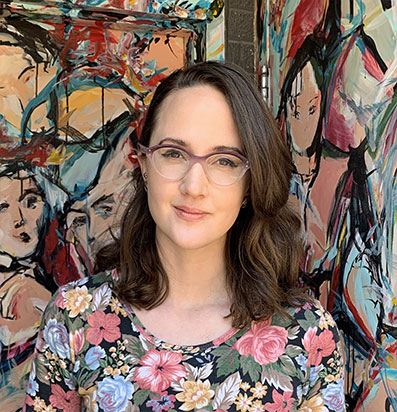
Cressida Frey
MSW, RSW (she/her) Registered Social WorkerAreas of focus:
- Children, Adolescents and Adults
- Violence, Trauma and Healing
- Stress and Anxiety

Derek Cassidy
MSW, RSW
(he/him/they/them)
Registered Social Worker
Areas of focus:
- Relationships and Attachment
- Complex, Relational Trauma
- Sexuality and Sexual Health
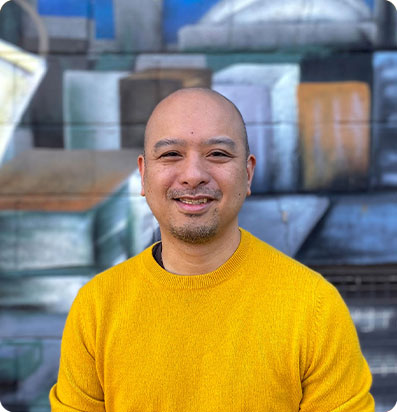
Jesmen Mendoza
C.Psych. (he/him) Adjunct PsychologistAreas of focus:
- Complex Mental Health
- Consultation

Jett Peters
MSW Candidate
(they/them)
Student Therapist
Areas of focus:
- Gender Identity
- Relationship(s) with Food & Body
- Trauma

Kathryn Bargis
MSc, RP (she/her) Registered PsychotherapistAreas of focus:
- Relationships
- Trauma
- Gender and Sexual Identity

Maxine Bower
MSW, RSW (she/her) Registered Social WorkerAreas of focus:
- Attachment in Individuals and in Relationships
- Complex Trauma
- Deepening Connections

Nicholas Sorg
MSc, RP
(he/him)
Registered Psychotherapist
Areas of focus:
- Stress, Anxiety, and Depression
- Sexual Identity Development
- Alternative Relationships, Relationship and Family Stress

Rae Griffin-Carlson
MSW, RSW
(she/her)
Registered Social Worker
Areas of focus:
- 2SLGBTQIA+ Youth & Adults
- Stress, Anxiety & Depression
- Sexual & Gender-based Violence

Rahim Thawer
MSW, RSW
(he/him)
External Clinical Supervisor
Areas of focus:
- Identity Conflict & Shame
- Dating, Relationships, Single by Chance/Choice
- Sexualized Substance Use

Saadia Khan
BA (they/them) Administrative and Social Media Assistant
Stephanie Wu
RP, Professional Art Therapist
(they/them)
Registered Psychotherapist
Areas of focus:
- Intimate Partner Violence, Sexual Assault & Childhood Abuse
- Impacts of Oppression
- 2SLGBTQIA+ Youth & Adults